

You Are What – and When – You Eat
We often think of sleep as a nighttime habit, but the truth is that good sleep begins with what you eat during the day.
Nutrition doesn’t just fuel your body; it programs your internal clock, affects hormone production, and influences how deeply you rest.
From your morning coffee to your late-night snack, every bite interacts with your circadian rhythm and neurochemistry, either promoting calm rest or sabotaging it.
According to a 2024 Harvard Medical Review study, individuals who maintained a sleep-supportive diet experienced 28% better sleep efficiency and 40% fewer night awakenings than those who didn’t.
Let’s explore how nutrition impacts sleep quality, and what to eat (and avoid) for deep, restorative rest. Stay with us, our folks!!!
The Science: How Food and Sleep Are Connected
Sleep and nutrition share a two-way relationship:
- Poor diet can lead to fragmented sleep, hormonal imbalance, and insomnia.
- Poor sleep increases cravings for sugar and processed food.
Here’s how it works:
| Mechanism | Role in Sleep | Example |
| Hormonal Regulation | Influences melatonin, serotonin, and cortisol | High-sugar diets increase cortisol |
| Blood Sugar Stability | Maintains steady energy and calmness | Balanced meals prevent night awakenings |
| Micronutrient Intake | Supports neurotransmitter synthesis | Magnesium, zinc, and B vitamins promote relaxation |
| Digestive Health | Gut microbes affect sleep hormones | Fiber-rich foods improve sleep quality |
In short, what you eat during the day determines how peacefully you sleep at night.
Key Nutrients That Improve Sleep Quality
1. Tryptophan: The Sleep Starter
Tryptophan is an amino acid that helps produce serotonin and melatonin, the key hormones regulating sleep and mood.
| Food Sources | Portion Suggestion | Benefit |
| Turkey | 3–4 oz | Promotes melatonin synthesis |
| Oats | 1 cup | Boosts serotonin production |
| Yogurt | ½ cup | Combines tryptophan + calcium for better absorption |
| Eggs | 1–2 | Supports a steady mood and rest |
Pro Tip: Combine tryptophan foods with complex carbs to help transport the amino acid into the brain efficiently.
2. Magnesium: The Natural Relaxer
Magnesium acts as a nervous system calmative, relaxing muscles, and reducing anxiety, both crucial for sleep onset.
| Food Sources | Daily Value (per 100g) | Function |
| Almonds | 270 mg | Calms the nervous system |
| Spinach | 80 mg | Regulates melatonin |
| Pumpkin Seeds | 262 mg | Improves deep sleep duration |
| Avocado | 30 mg | Aids relaxation and heart rhythm |
Low magnesium levels are linked with restless legs, insomnia, and light sleep cycles.
Also Read the Latest: How Athletes and Active People Can Recharge More Effectively
3. Vitamin B6: The Sleep Catalyst
Vitamin B6 helps convert tryptophan into melatonin.
Deficiency may lead to mood swings, fatigue, and irregular sleep.
| Food Sources | Benefit |
| Bananas | Natural B6 + potassium combination for muscle relaxation |
| Chickpeas | Supports melatonin production |
| Tuna | High B6 and protein source for evening meals |
4. Zinc: The Hormone Balancer
Zinc works with magnesium to stabilize cortisol and enhance REM sleep.
In fact, a 2023 Japanese study showed that athletes with higher zinc intake had shorter sleep latency and longer deep sleep cycles.
| Source | Best Time to Eat | Function |
| Pumpkin Seeds | Evening snack | Balances hormones |
| Cashews | Afternoon snack | Reduces fatigue |
| Lentils | Dinner | Sustains serotonin levels |
5. Melatonin: The Sleep Hormone
Melatonin can be consumed naturally through foods, no supplements are needed for most people.
| Melatonin-Rich Foods | Sleep Benefit |
| Tart cherries | Boost natural melatonin production |
| Grapes | Enhance circadian rhythm regulation |
| Walnuts | Promote deep sleep |
| Tomatoes | Mild natural melatonin source |
Read More On: How to Align Your Circadian Rhythm for All-Day Energy Gains
Foods That Hurt Sleep
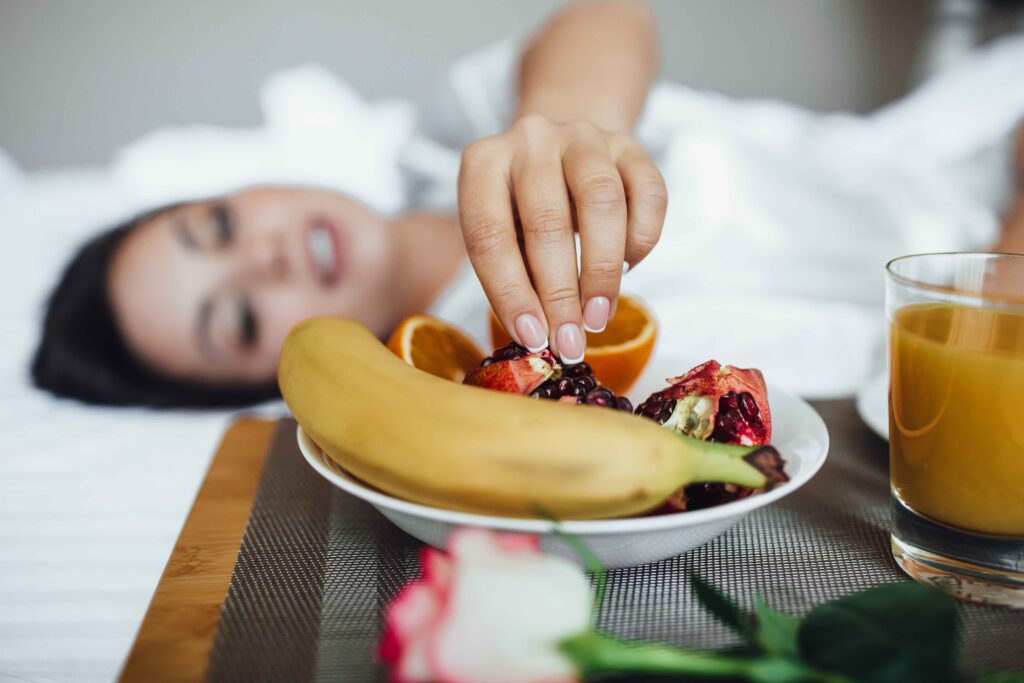
Not all foods are your friend before bedtime. Some disrupt hormones, digestion, or body temperature, preventing deep rest.
| Food Type | Why It Disrupts Sleep | When to Avoid |
| Caffeine (coffee, tea, chocolate) | Blocks adenosine, delaying sleep | After 2 PM |
| Sugary Snacks | Causes blood sugar spikes and crashes | 3–4 hours before bed |
| Spicy or Fried Foods | Triggers acid reflux and indigestion | Dinner time |
| Alcohol | Induces drowsiness but fragments deep sleep | Evening |
| Processed Meats | High sodium and preservatives raise cortisol | Late-night meals |
Quick Fact: Alcohol may make you fall asleep faster, but it reduces REM sleep by up to 50%, leaving you feeling groggy.
Timing Matters: When You Eat Is as Important as What You Eat
Eating late confuses your internal clock (circadian rhythm), which expects rest, not digestion, at night.
| Eating Pattern | Impact on Sleep | Recommendation |
| Heavy dinner close to bedtime | Delays melatonin and causes reflux | Eat 2–3 hours before bed |
| Skipping dinner | Low blood sugar triggers cortisol spikes | Opt for a light protein-based dinner |
| Late-night snacking | Causes shallow sleep and weight gain | Avoid after 9 PM |
The body digests best when aligned with the light-dark cycle, meaning earlier, lighter dinners are more sleep-friendly.
Sample Sleep-Boosting Meal Plan
Here’s a nutrition blueprint to help regulate your sleep naturally.
| Meal | Foods | Nutrient Focus | Sleep Benefit |
| Breakfast | Oatmeal with banana + walnuts | Tryptophan + B6 | Sets serotonin baseline |
| Lunch | Brown rice + grilled chicken + spinach | Magnesium + zinc | Maintains energy stability |
| Snack | Yogurt with cherries | Calcium + melatonin | Prepares the body for calmness |
| Dinner | Salmon + steamed broccoli + quinoa | Omega-3 + tryptophan | Promotes deep rest |
| Evening Tea | Chamomile or passionflower tea | Natural sedative | Lowers stress and aids relaxation |
Caffeine and Sleep: How Long Is Too Long?
Caffeine blocks adenosine receptors, the same brain pathways that trigger sleepiness.
Its half-life is 5-7 hours, meaning that your 4 PM coffee can still keep you alert at 10 PM.
| Time Consumed | Caffeine Still Active? | Sleep Impact |
| 9:00 AM | ❌ Mostly cleared | Safe |
| 12:00 PM | ⚠️ Partial presence | Slightly delayed sleep onset |
| 3:00 PM | ✅ Active | Noticeable interference |
| 6:00 PM | 🚫 High interference | Suppressed deep sleep |
Recommendation: Avoid caffeine 8 hours before bedtime to preserve melatonin balance.
The Gut-Sleep Connection: Why Digestion Matters
Your gut produces 95% of your serotonin, which converts into melatonin at night.
A healthy gut equals healthy sleep.
| Gut Factor | Sleep Impact | Best Foods |
| Good Bacteria | Promote serotonin balance | Yogurt, kefir, sauerkraut |
| Fiber Intake | Prevents night-time hunger | Whole grains, legumes |
| Digestive Ease | Improves melatonin conversion | Cooked vegetables, soups |
Gut imbalances like acid reflux, bloating, or IBS often disrupt sleep due to internal discomfort and inflammation.
Hydration and Sleep: Finding the Balance
Dehydration can lead to muscle cramps and dry mouth, while overhydration causes frequent night urination.
Sleep Hydration Tips:
- Drink water consistently throughout the day.
- Reduce liquid intake 1 hour before bed.
- Limit alcohol and carbonated drinks in the evening.
Bonus Tip: Add a pinch of sea salt or electrolytes to your afternoon water for stable hydration.
Complements That Support Better Sleep
Sometimes, even with a balanced diet, extra support helps.
However, supplements should be used under professional supervision.
| Supplement | Function | When to Take |
| Magnesium glycinate | Calms the nervous system | 30 min before bed |
| Melatonin (1–3 mg) | Regulates the sleep cycle | As prescribed |
| L-theanine | Reduces stress hormones | Evening |
| GABA | Encourages relaxation | 1 hour before sleep |
Always consult a nutritionist or doctor before adding supplements, overuse can cause dependency or hormonal imbalance.
Case Studies: Real-Life Examples of How Nutrition Transforms Sleep
Case Study 1: Maria, 34 – Fixing Late-Night Sugar Crashes to End 3 A.M. Wake-Ups
Maria, a marketing manager and busy mom, struggled with waking up multiple times at night. Her evenings often included “quick energy” snacks like cookies or leftover desserts, which caused sharp glucose spikes followed by sudden drops during sleep. This fluctuation triggered cortisol release, waking her up at almost the same time every night.
After tracking her food and sleep using a digital log, Maria replaced evening sugar with magnesium-rich foods like almonds, bananas, and chamomile tea. Within two weeks, she reported fewer night awakenings and a deeper, more continuous sleep cycle.
This shift taught her that small dietary choices before bedtime can dramatically improve sleep stability.
Read More On: How Antioxidant-Rich Fruits Boost Athletic Longevity
Case Study 2: Daniel, 42 – The High-Caffeine Professional Who Rebuilt His Sleep Window
Daniel, a finance analyst, relied on coffee to manage long workdays, often drinking his last cup at 6 p.m. He assumed caffeine only affected him if consumed “right before bed,” but he didn’t know that caffeine’s half-life lasts 5-7 hours. This pushed his natural sleep window later, leaving him restless even when exhausted.
After reading about caffeine metabolism from Harvard Health Publishing → https://www.health.harvard.edu/, he shifted his final coffee to noon and replaced evening drinks with warm milk and herbal tea. He also added tryptophan-rich foods like turkey and oats to his dinner.
In three weeks, Daniel fell asleep an hour earlier, reduced insomnia episodes, and woke up with noticeably higher morning alertness. His work performance and mood improved because his sleep cycle finally aligned with his nutrition routine.
Case Study 3: Ayesha, 27 – Healing Stress-Driven Insomnia With Omega-3 and Consistent Meal Timing
Ayesha, a graduate student, dealt with stress-driven insomnia and irregular eating habits. Some nights she skipped dinner entirely, while other times she ate heavy fried foods close to bedtime. Her fragmented sleep made her mornings sluggish and affected her ability to focus.
A nutritionist recommended she stabilize her sleep by nourishing her nervous system with omega-3 fatty acids found in foods like salmon, chia seeds, and walnuts. She also adopted a structured meal schedule, finishing dinner at least 3 hours before lights-out. Within a month, her sleep went from 4–5 restless hours to a full, deep 7-hour cycle.
This plan not only reduced inflammation and anxiety but also restored her natural melatonin production.
Share Your Story With Us – We’d Love to Hear It!
If you’ve experienced a transformation in your sleep through smarter nutrition choices, your story could inspire thousands of other readers. At Active Health Sport, we genuinely care about your journey toward better health, energy, and balance.
Feel free to reach out and share your sleep-and-nutrition experience with our team. Whether it’s a small victory or a breakthrough, we’d be happy to feature it, learn from it, and help others benefit from real-life experiences just like yours.
What Elite Athletes Eat for Better Sleep
Elite performers treat nutrition and sleep as equal priorities.
Here’s what research and athlete routines show:
| Athlete | Sleep-Nutrition Habit | Result |
| LeBron James | Protein-rich dinner + magnesium supplement | Deeper recovery sleep |
| Serena Williams | Avoid sugar 4 hours before bed | Reduced inflammation |
| Eliud Kipchoge | Eats early dinner (6 PM) | Strong circadian rhythm alignment |
| Simone Biles | Herbal tea + no caffeine after noon | Improved REM quality |
Athletes know that every rep, sprint, or jump depends on recovery nutrition and rest synergy.
Practical Nighttime Nutrition Tips
- Finish dinner 2-3 hours before bed.
- Avoid high-sodium foods that cause dehydration.
- Dark chocolate is healthy, but before 5 PM.
- End your day with calming herbal tea, not coffee or wine.
- Add a mindfulness habit post-meal to relax digestion.
Read More On: Here’s the Perfect Nighttime Routine for Deep Sleep
Final Thoughts: Eat Smart, Sleep Deep
Sleep isn’t just about a dark room and a quiet night, it’s about how you’ve fueled your body all day.
Your diet shapes your hormones, gut health, and nervous system, all of which decide how restful your night will be.
By choosing the nutrient-rich foods, timing your meals wisely, and avoiding stimulants, you can train your body to fall asleep faster, stay asleep longer, and wake up genuinely refreshed.
Good nutrition doesn’t just feed your muscles, it feeds your dreams.
People Also Ask – (FAQs)
Q: What foods help you sleep better at night?
Foods naturally rich in tryptophan, magnesium, and melatonin, like bananas, tart cherries, nuts, oats, and warm herbal teas, help your body relax and support deeper, more restorative sleep. These nutrients promote melatonin production, calm your nervous system, and prevent nighttime awakenings.
Q: Which foods should I avoid before bed?
Avoid caffeine, alcohol, spicy dishes, high-fat meals, and sugary snacks within three hours of sleep. These foods overstimulate the nervous system, cause indigestion, spike cortisol levels, and disrupt your body’s natural melatonin production, leading to poor-quality sleep.
Q: Does drinking milk really help with sleep?
Yes. Warm or cold milk contains tryptophan and calcium, both essential for natural melatonin production. These nutrients support relaxation and help your brain wind down, making it easier to fall asleep, especially when paired with a calming bedtime routine.
Q: How long before bedtime should I eat dinner?
Most sleep specialists recommend finishing dinner 2-3 hours before bedtime. This gives your digestive system enough time to process the meal, reducing the risk of bloating, acid reflux, or nighttime discomfort that can interrupt sleep cycles.
Q: Can certain diets improve sleep quality?
Absolutely. Diets rich in omega-3s, whole grains, fiber, antioxidants, and minerals, especially the Mediterranean diet, have been shown to support deeper sleep, reduce inflammation, stabilize blood sugar, and promote more consistent circadian rhythm patterns.
Q: Do late-night snacks ruin sleep or can they help?
A small, balanced snack can actually support sleep, especially if it includes protein + complex carbs, like Greek yogurt with berries or a banana with almond butter. Overeating, however, triggers digestion and keeps your heart rate elevated, which can delay deep sleep and cause restlessness.
You might also like the following…
- Why Mobility Matters More Than Muscle for CrossFit Progress
 In CrossFit culture, strength numbers often steal the spotlight: heavier deadlifts, faster WOD times, and bigger PRs. While muscle and power are essential, they are not the limiting factor for long-term CrossFit progress.… Read more: Why Mobility Matters More Than Muscle for CrossFit Progress
 - Zone-2 Walking for CrossFit Athletes Explained
 In CrossFit, conditioning is often associated with intense, fast-paced WODs, high heart rates, and breathless finishes. While this intensity builds power and short-term fitness, it does not fully support aerobic efficiency, recovery capacity,… Read more: Zone-2 Walking for CrossFit Athletes Explained
 - How Low-Intensity Walking Restores the Nervous System
 CrossFit is designed to test physical limits. Heavy lifts, fast-paced metabolic conditioning, and complex gymnastic movements demand not only muscular strength but also significant nervous system output. While most athletes focus on muscle… Read more: How Low-Intensity Walking Restores the Nervous System

Kait Amazra is the founder and lead writer of Active Health Sport. With over 25 years of experience in health, fitness, and wellness education, Kait combines professional expertise with a passion for helping people live stronger, healthier, and more balanced lives.
As a licensed health and fitness professional, Kait has worked alongside industry experts to deliver evidence-based insights on physical activity, nutrition, recovery, and holistic well-being. Through Active Health Sport, Kait’s mission is to make trusted, practical, and science-backed health information accessible to everyone, from beginners building new habits to athletes seeking peak performance.